
From the Chapter On Sleep from Brain Rules
Brain Rule: Sleep Well, Think Well
Lack of sleep hurts learning. Sleep loss= Mind loss.
- An A student who scores in the top 10% of the class can be reduced to scoring in the bottom 9% by simply cutting their sleep to 7 hours per night
- One night’s sleep loss (one all nighter) can result in a 30% loss in cognitive skill
- If we reduce sleep to 6 hours per night, it has the same as staying up for 48 hours
- Sleep deprived people reduce ability to utilize the food they consume by 30%, ability to use insulin decreases rapidly, at the same time stress hormones increase and a rapid increase in the desire to eat sugar
- Sleep deprivation accelerates aging process. 6 days of sleep deprivation (4 hours per night) can make a 30 year old have body chemistry of a 60 year old.
What Helps?
- Naps
- ‘sleeping on it’- disrupting a night’s sleep can eliminate learning from the day
From Professor Wong
- 45% of adolescents do not sleep enough.
- Sleep-deprived teenagers:
- find it difficult to focus
- are more likely get sick.
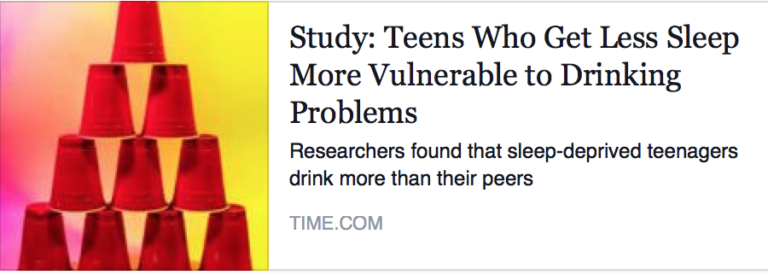
- Are 47 percent more likely to binge drink
- are 14 percent more likely to drive drunk
- are 11 percent more likely to have interpersonal issues related to alcohol
- and 80% more likely to engage in regretted sexual activities
- each extra hour of sleep the teens got corresponded with a 10 percent decrease in binge drinking
- Adolescents may have insufficient sleep due to a variety of reasons including academic and social obligations, poor sleep hygiene, and 24/7 Internet access through phones and computers
- sleep deprivation can have an adverse impact on executive functions and inhibitory processes of the brain. Which may be the reason for the increase in the likelihood of engaging in risky behaviors
- A lot of parents don’t monitor their adolescents’ sleep schedules and let them make their own decisions about when to go to bed. But parents need to start talking to their teenagers, not just about grades and extra-curricular activities but about sleep too.
From National Sleep Foundation and Nationwide Children’s Hospital:
- Sleep is vital to well-being, as important as air, water and food. It can even help you to eat better and manage the stress of being a teen.
- After puberty, there is a biological shift in an adolescent’s internal clock of about 2 hours, meaning that a teenager who used to fall asleep at 9:00 PM will now not be able to fall asleep until 11:00PM, and then wake 2 hours later in the morning
- Teens need about 8 to 10 hours of sleep each night to function best. Most teens do not get enough sleep. The average amount of sleep that teenagers get is between 7 and 7 ¼ hours. Some studies show the need to be between 9 and 9 ½ hours
- Teens tend to have irregular sleep patterns across the week — they typically stay up late and sleep in late on the weekends, which can affect their biological clocks and hurt the quality of their sleep.
Issues/Suggestions
- Maintain a regular sleep schedule. Your teenager should go to bed and wake up at about the same time each day. Her sleep schedule should also ensure adequate time in bed.
- Avoid oversleeping on weekends. Although catching up on some sleep on the weekends can be helpful, sleeping in until noon on Sunday will make it hard for your teenager to get back on a school schedule that night.
- Take early afternoon naps. A nap of 15-20 minutes in the early afternoon can be beneficial.
- Turn off televisions, computers, and radios. Television viewing, computer-game playing, internet use, and other stimulating activities at bedtime will cause problems falling asleep.
- Avoid caffeine, smoking, alcohol, and drugs. All can cause sleep problems
- Social and school obligations. Homework, sports, after-school activities (often occurring during the evening), and socializing lead to late bedtimes.