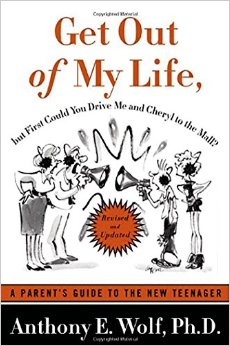


I’d Listen to my Parents if they would just shut up
What to Say and Not Say When Parenting Teens
by: Anthony Wolf, PhD
Download AnnotationsI chose this book knowing it was written recently and I wanted to read about
communicating with teenagers facing the challenging and completely different set of
issues in the world today. The title also intrigued me by scaring me and making me
laugh at the same time. It is written with useful insight and humor and I know it will be a
useful guide when I need it.
Since we are learning now that teenagers may have selected hearing, this is a great
tittle because the author offers suggestions of what is important and what is not. When
to choose our battles and when to back off. When to say no, and when to make
exceptions. Most importantly that the consequences of being too hard on a teenager
may be detrimental by shutting them down further.
The book is broken into useful chapters and sub chapters that make it easy to go back
to for reference and are written with humor which makes some of the difficult banter
between the parents and teenagers a lot easier to get through.
Some of the topics covered:
-The cure for your teen’s allergy to you
– Being with teens when they don’t want to be with you
-Importance of saying ” no”
-When to cave in.
-Dealing with back talk
-What to do when a teen throws you a curve
Things that are good to know:
-Completely normal for teens to contract a temporary allergy to their parents once they
hit adolescence.
-This stage is short lived ( good news!)
-Teenagers acting out ” baby selves” with us because they feel safe. This doesn’t mean
they are acting this way with people they do not know/ or in public.
– How they react towards to us is most likely not a reflection of how they act around
other adults.
The author points out that teenagers can get stuck in a mindset ( their “baby selves”)
and not let go of their anger towards us when we tell them what to do, or what not to do.
It’s important for the parents not to get sucked in ( bringing out their own “baby selves “)
to prove a point. If both parties are stuck in this mind set, the arguing can continue for
days.
* DisengagingThe most important tool in this book. When to walk away from possible arguments that
have no importance in the long run and could potentially shut their ears down for future
conversations. Important to have them listen to the things that are most important like
health & safety.
* Saying no.
Saying no and sticking to it but at the same time knowing when to give in (within reason)
over things that you know will escalate into an unnecessary argument. If giving in,
explain that this is an exception and explain the reason for the exception.
Rewards/ punishments.
Small allowance & technology time increases / decreases usually work better than
huge punishment ( taking away a special class trip ) as the later may backfire by only
making teenager more bitter.
Scaring them as many people thought best in the 50’s is not the solution now as it may
shut them down from us and later the teenager could react elsewhere. That is not to say
we need to let them with everything when acting badly. It is just to say we shouldn’t over
react or take anything too personally.
Trying to use natural consequences when an unpleasant outcome becomes the direct
consequence of an action not taken:
Instead of asking ( what a teenager usually hears as ” nagging “) for days for your
teenager to put dirty clothes in hamper, instead of taking away allowance, let them have
dirty clothes ( page 82 )
Basically this book boils down to giving the reader tools to deal with how to deal with
resistance and how best to disengage.
Wolf states ” it is important to accept that you cannot control everything. You have to
take chances because you don’t really have a choice. Having a teenage child exposes
you to the absolute probability that some things you really don’t want to have happen
will happen” ( page 168)